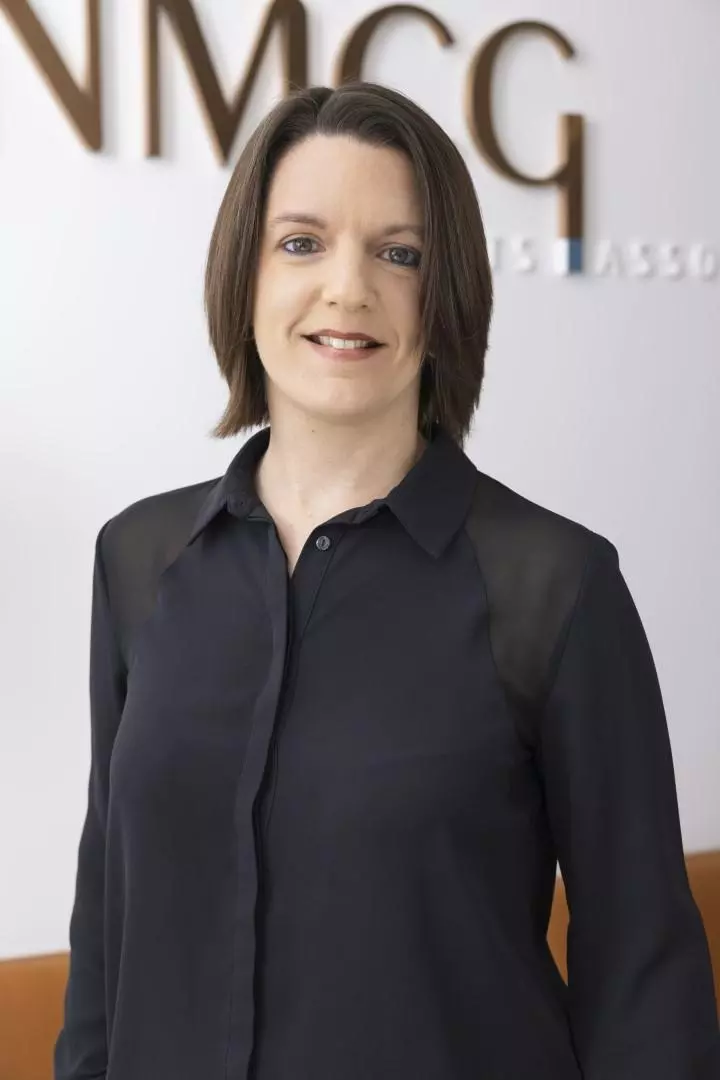

Lawyer profile : Cyril Chabert
28 February 2023
- Why did you pursue your studies to the doctorate?
Paradoxically, because when I left high school, I didn’t have a clear vocation as a lawyer.
Let me explain. I didn’t have a lawyer in my family and when I graduated from high school I went into business. Then, at the end of this course, I had the idea of joining the CELSA, but without anticipation, so I had omitted to apply to the integration session in February. Rather than lose a year, I enrolled in law school, as the “business-law” double major is quite common. So I started my law studies at the Faculty of Aix-en-Provence and it was really a revelation. I liked it immediately. When I arrived at my degree, there was no longer any question of CELSA, my horizon was marked by business law and especially the subject of private international law. After my master’s degree, I entered a DEA (today we would say Master II Research) in economic law and I left with the proposal to do a State thesis, in the subject I wanted, on a subject validated by the Ministry.
It will therefore be a thesis in private international law (a subject that deals with the various issues that arise in all disputes that are not exclusively Franco-French).
The doctorate is a demanding phase of study. I would recommend it without hesitation to any student (for the hindsight it offers on the science of law, the mastery it brings on the different techniques of argumentation), but underlining that it is also a trying exercise because one lives for almost 5 years with his subject. We will doubt it. We will dream about it. We will be enthusiastic about it and some days curse its complexity. This subject will punctuate the days and shorten many nights. This exercise requires total immersion in the subject, to master it … and, consequently, it also isolates you, especially when former business school friends come to see you … It is a solitary exercise, of reflection and writing, but it is a terribly formative exercise. In parallel to this preparation phase, I was integrated in a research center of the faculty where, in addition to teaching, one of my activities consisted in answering requests for consultation from lawyers on my fields of interest. It was this activity that really triggered my orientation towards the legal profession.
As for a thesis, I was asked to put into practice a sense of research, an apprehension of the subject, the construction of an argumentation with an offensive or defensive purpose. But unlike a thesis, the problems were renewed, the questions varied, the contexts were always singular and in touch with the reality of everyday life.
- Why did you turn to an activity in e-commerce?
It’s a coincidence and I always pointed it out to my students (I taught for 15 years). One of the keys to a fulfilling career is of course to take pleasure in your job, to know what you want, but at the same time to be open-minded, without preconceived ideas, with a great sense of adaptation. In any journey, one sometimes arrives at points of intersection, paths that open up and that one must feel free to take and seize without excessive rigidity.
As I mentioned, the subject of my thesis was private international law and I started working in maritime law (with ships coming from various places, convoluted questions of competent jurisdictions, law applicable to the fate of cargo that germinates in the hold, due to the fact that a ship is seized because of the non-payment of “demurrage” fees) and in transport law. I had just finished my thesis and, as I said, I wanted to get to grips with concrete cases. I was admitted to the Paris Bar in January 2002, just after the internet bubble burst. In other words, e-commerce sites were of no interest to any established firm, except for a few computer law practitioners. The activity of e-commerce sites was then considered marginal, not to say dubious.
However, these sites upset the pre-square of the distribution circuits which continued to perpetuate a national tariff quota contrary to the free movement of goods in Europe. In concrete terms, if the average standard of living in Belgium was 70, while in France it was 100, manufacturers continued to offer a “SFX-80” television set at 70 in Belgium, while their French subsidiary put it on the market at 100. The pioneers of e-commerce simply spotted this gap by going to a European country where a product was put into circulation at a lower cost, to resell it in France. This was the first application of this pillar of European law, but it was naturally very badly experienced by the manufacturers whose network organization was disrupted by these sites. This gave rise, as you can imagine, to epic tug-of-war, with the manufacturers of the time multiplying the hassles concerning the origin of products sold in France, in terms of international product guarantees, off-network supply, and resale conditions on the French market. It is quite naturally that, starting with a training in international law, I was solicited by actors of the electronic commerce to help them and what became very quickly my dominant practice. Then came the turning point in 2005, when the e-commerce channel asserted itself to become unavoidable.
My current activity is therefore the result of my initial practice, involving the entire e-commerce chain, from the website (or app today), to the management of the logistics chain, transport management, to the administration of customer relations, with more classic issues of competition, distribution or consumer law.
- What type of relationship do you have with your clients?
Precisely, I don’t have a type.
In consulting, we try to be in a relationship of assistance (because, in this sector, the in-house lawyer was for a long time the last to be recruited). One must understand the will of the project or development, try to meet the objective by explaining the constraints, by thinking about the most suitable framework, but above all not be a censor, a “yes or no” man, a counter-image too often associated with the lawyer.
In litigation, the relationship is different and depends on the impact of the procedure on the life of the company. Sometimes, an entrepreneur transfers an unfair competition case to his lawyer, giving him carte blanche internally, so as not to be personally mobilized at a time when he needs to be totally focused on other issues. At other times, because he has the time, because the conflict has an impact on some of his projects, because he was particularly involved in a relationship, he wishes to be involved in all stages of the representation. We adapt to the expressed need.
- What book would you absolutely recommend?
The question is very broad.
I don’t have one specific book to recommend, rather I will have many.
I love to read and I think that many lawyers do, because our profession invites us to be constantly informed of the evolution of thought, of the beautiful doctrinal jousts, of the twists and turns of jurisprudence. Afterwards, like everyone else, I have my favorite historical periods, my favorite genres (I really like biographies or autobiographies, these life stories where the author reveals more or less unvarnished the ordeals he or she has faced, the fruits of his or her experience, his or her lessons) and then I have interests that vary over the years.
So to be concrete, I devoured many biographies on the period of the Revolution, the Consulate and the Empire and I can only recommend ” Les Mémoires d’Outre-Tombe ” of Châteaubriand, of an unequalled stylistic richness to my eyes. I was marked, like many, by ” Voyage au bout de la Nuit ” of Céline. I devoured “Belle du Seigneur” by Albert Cohen, not only to follow the thread of Ariane and Solal’s passion, but also for the so funny description of the diplomatic habits and customs at the SDN. I think I have read all the novels that Max Gallo published until the beginning of the 1990s, in which, after having occupied governmental functions, he gave his feelings on his career, his experiences and disappointments.
But I also like to discover authors, other literatures a little bit at random in bookstores and at the moment I started “A Season in Hydra” by Elisabeth Jane Howard, a tome of her saga of the Cazalet family describing the English society on three generations.
- If you could have dinner with any person of your choice (living or dead), who would it be? And why?
I don’t have a specific list, I like to trade.
Of course, there are many outstanding women and men with whom I would have liked to share, understand and question. But for example, a few days ago I was listening to the program l’Invité de France Info in which the philosopher Julia de Funès was invited. I was impressed by her speech, the clarity and finesse of her opinion, her perspective going far beyond the current issue of pensions on which she was questioned. So, to answer you, I am convinced that a dinner with her would be exciting.
- How does it feel to be working in the same firm as your old college friend, Arnaud Blanc de la Naulte?
One of my assistants had this funny word: “I understand you, I also had a college friend with whom I rehearsed on weekends, so it’s a bit like the mythical group we had promised to put together that you’re making“.
With Arnaud, we have never left each other since the first year in history of law and public institutions. We each have our own subjects, our own backgrounds and we often promised each other that one day we would get closer. I always called on him in his field and vice versa, but sometimes the opportunity did not present itself or the timing of our openings was not in phase. 2022 was, and what can I tell you, except that I am necessarily very happy about it.
- How do you see the merger between Chain and NMCG?
While our relationship was the trigger for the merger idea, it was by no means the deciding factor. First, because we are not the only decision makers. Secondly, because we have specifically looked at the common interest. And this time the timing was perfect.
NMCG Paris had two dominant poles, employment law and M&A, where Chain had a marked core activity, contract and competition law. This does not mean that these poles were exclusive in both structures (commercial law was not unknown to the NMCG teams, as corporate law and intellectual property were not unknown to the Chain teams). But the rapprochement in the spectrum of business law was obvious to all.
So, quite simply, I see this merger as natural.




![Contractual termination vitiated by employee malice [...].](https://www.nmcg.fr/wp-content/uploads/2024/08/Photo-article-85.png)