
Taxation of gambling winnings
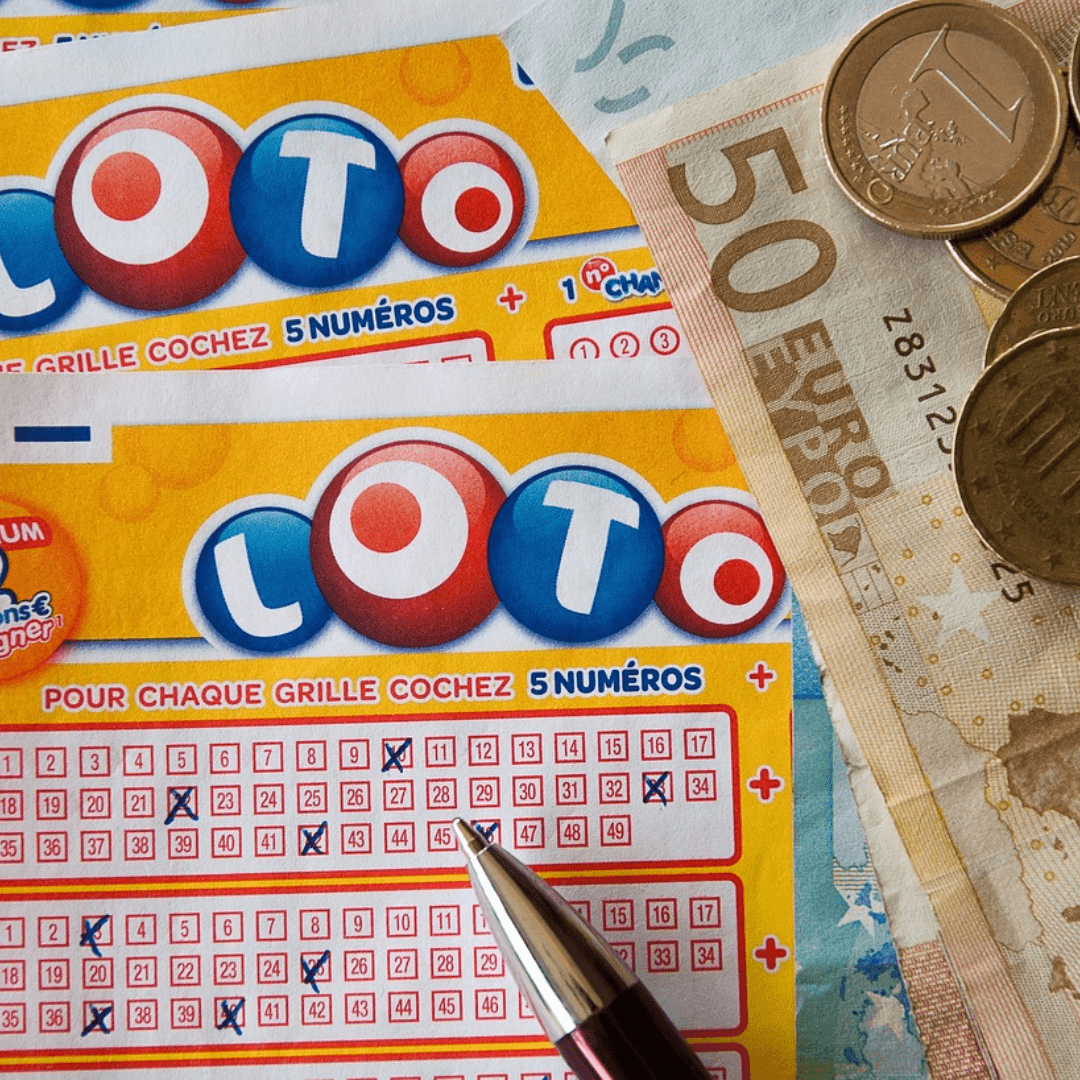
Whether or not winnings from games of chance are taxable depends on the degree of hazard control inherent in the game.
1/ The principle: non-taxation of gambling winnings
Winnings from games of chance are not subject to income tax. This principle is now well established. Article 92(1) of the General Tax Code states that ‘The following are considered as coming from the exercise of a non-commercial profession or as income assimilated to non-commercial profits: profits from the liberal professions, from offices and positions whose holders do not have the status of traders, and from all occupations, lucrative exploitations and sources of profits not connected with another category of profits or income’.
According to the tax authorities, ‘the practice of games pure chance (lotteries, tombolas or various games) in which the player has no control over the uncertainty weighing on his prospects of winning does not constitute a gainful occupation or a source of profit giving rise to taxation in the name of the persons participating in these games ’1.. The Conseil d’Etat has long held this view in a decision relating to the 1972 lottery.2.
A recent, rather unusual case illustrates the vagueness that still reigns: a taxpayer found a winning Euro Millions ticket (€163 million in prize money) on the public highway. At the same time, the real player who lost the ticket comes forward. La Française des Jeux refuses to pay out the winnings without an agreement between them; in the end, the real player pays a compensation of 12 million euros to the taxpayer who found the ticket. Before the Administrative Court, the tax authorities attempted to tax the €12 million compensation as a capital gain on the sale of movable property: the taxpayer had allegedly sold the winning ticket to the original player. Dismissed at first instance on the grounds that the taxpayer was not the owner of the ticket, the tax authorities argued on appeal that the compensation constituted consideration for a service and was therefore taxable as non-commercial profits. The Court of Appeal also invalidated this approach, ruling that ‘the profit in question was by its very nature insusceptible of renewal […] having regard to the purely accidental nature of this gain’. The Conseil d’Etat3 confirmed the analysis of the lower courts.
2/ The exception: winnings made by a professional poker player who has significant control over the risks inherent in the game.
In a decision dated 21 June 2018, the Conseil d’État ruled that ‘If the practice, even habitual, of games of chance does not constitute a lucrative occupation or a source of profit, within the meaning of the aforementioned provisions of article 92 of the General Tax Code, because of the uncertainty that weighs on the player’s prospects of winning, the same cannot be said of the practice, even habitual, of games of chance. the habitual playing of a gambling game between a player and opponents where it enables the player to significantly control the risks inherent in the game, by virtue of the skills and know-how he develops, and provides him with significant income. The resulting gains are then taxable, pursuant to Article 92, in the non-commercial profits category, even if the taxpayer also carries on a professional activity’.4.
According to this decision, gains will be taxed if they result cumulatively from :
- Habitual practice (to determine this, judges look at the number of poker games played5 and the number of poker platforms on which the player is registered6);
- Using skills acquired in the field of games ;
- And generate significant revenue.
For example, the Bordeaux Administrative Court of Appeal ruled on 24 May 2022 that ‘In 2013 and 2014, Mr E took part in online poker tournaments on various specialised sites, placing 136 bets in 2013 and 165 bets in 2014, representing a volume of €82,786 and €114,743 respectively. It is also clear from the investigation that Mr E also took part in physical tournaments during this period, six in 2013, in Berlin, Deauville, Nice, Las Vegas, Monaco and Prague, and four in 2014, in Las Vegas, Prague and San Remo, as well as in the Deauville tournament, which he won in 2013. Mr E’s earnings amounted to €833,961 in 2013 with a net profit of €638,968 and €181,841 in 2014 with a net profit of €23,976. The amount and regularity of these winnings suggest that the risks inherent in poker have been significantly controlled. In these circumstances, the applicant must be regarded as having carried on, over the two years in question, a lucrative activity as a poker player providing him with regular profits taxable as non-commercial profits’.7. An identical solution was reached in a case where a player had average monthly winnings of €3,526 in 2013, €7,376 in 2014, €7,634 in 2015 and €9,500 in 20168.
In another case, the same court ruled that ‘if the game of poker, and more specifically the version of the game known as
Although the game of ‘Texas Hold’em Poker’ played by Mr. A… involves an element of chance linked to the distribution of cards specific to each player or common cards, a player can succeed, thanks to his experience, to an adequate strategy based in particular on the estimation of the various possible combinations of cards, and to an analysis of the psychology of his opponents, in considerably reducing the random nature of the result of this game and in appreciably increasing his probability of collecting large and regular winnings’.9.
The significant nature of the income may also result from a comparison between the poker winnings and the taxpayer’s salary income10. It should also be noted that the fact that the taxpayer appears in the rankings of the best poker players and is not otherwise employed are also indications that the winnings should be taxed11.
3/ What about winnings from sports betting by a professional gambler?
As the law stands, the principle of non-taxation remains. According to case law, ‘professional poker players, who can significantly reduce the randomness of the outcome of this game and increase their probability of receiving large and regular winnings as a result of their experience, are not in the same situation as regular players of paying games such as horse racing and sports betting, the results of which are, save in exceptional circumstances, essentially random, even if these players can base their bets on the study of odds and probabilities, their knowledge of the game, the players or horses and their jockeys, their form and their previous performances’.12. For horse betting, the solution is an old one, dating back to 1980.13.
However, certain practices could justify the taxation of significant winnings from a game insofar as these practices eliminate the element of chance. This includes surebets and the conversion of freebets into withdrawable money.
Surebet is a safe bet. The player who makes this bet is certain to win. An overbet occurs when the rate of return for the player is greater than 100%14.
Example: Teams A and B have a match. The odds are as follows: 4 for Team A to win, 4 for a draw and 2.50 for Team B to win. The return rate for this bet is 111%.15. The bettor decides to bet the €486 at his disposal as follows:
- 135 on an A team win. Possible win: 540 (4×135) ;
- 135 for a draw. Possible gain: 540 (4×135) ;
- 216 on a win for team B. Possible win: 540 (2.5×216).
Whatever the outcome of the match, the punter is guaranteed to win €540, i.e. a net win of €40. This operation, carried out several times over the course of a year, can generate significant winnings for the player. But only the most experienced punters can detect overbets. This requires you to be registered with several bookmakers16, sometimes even with those based abroad (which are therefore not approved by the National Gaming Authority). In general, an overbet occurs when there is a quoting error by the bookmaker or a commercial operation by the bookmaker (‘boosted’ odds).
Bets designed almost exclusively to convert freebets into cash are another way for players to win money without risk. Freebets are free bets offered by bookmakers. A winning bet with a freebet only allows the player to receive the net win. For example, a player who places a freebet bet of one euro on odds of 4 will win not 4 but 3 (4-1) euros. To convert freebets into cash without risk, the punter generally has to bet on several outcomes of the same match. The higher the return rate, the more money the freebets will bring in.
It should be noted that the tax judge has not yet ruled on these two practices.
1Doctrine BOI-BNC-CHAMP-10-10-20-40; v. also Rep. Crépeau : AN 3-10-1979 n° 16515 :
“Except in exceptional circumstances, the practice, even habitual, of games of chance, such as those referred to in the question, does not constitute a lucrative occupation or a source of profits that should give rise to taxation in the name of the persons participating in these games. Nor do the latter have to pay value added tax on the winnings they receive from this participation”. According to an answer to a parliamentary question, ‘winnings from games, even those played on a regular basis, do not constitute […] a lucrative occupation or a source of profits that should give rise to taxation’ (JOAN, 15 nov. 2011 p. 12011).
2CE, 23 Jul. 1976, n° 99398.
3CE, 27 May 2020, no. 434067.
4CE, 21 June 2018, no. 412124.
5CAA Nancy, 31 January 2019, no. 17NC02774.
6CAA Nantes, 12 Dec. 2019, n° 18NT03242.
7CAA Bordeaux, 24 May 2022, no. 20BX00574.
8CAA Nantes, 9 December 2022,
n° 21NT00480.
9CAA Bordeaux, 7 March 2019, no. 17BX00795; CAA Versailles, 20 Oct. 2020, nº 18VE01709.
10CAA Douai, 17 July 2020, no. 18DA01039; v. aussi CAA Nancy, 31 janv. 2019, nº 17NC02773.
11CAA Bordeaux, 29 Nov. 2022, nº 20BX02407.
12CAA Nantes, 25 April 2019, nº 17NT03263.
13CE, 21 March 1980, no. 11235: ‘save in exceptional circumstances, the practice, even habitual, of betting on horse races does not constitute a lucrative occupation or a source of income within the meaning of this text, even if the amount of the winnings from these bets in the course of a year is greater than the amount of the taxable profits or income declared by the taxpayer in respect of the said year’; v. also CE, 7 May 1980, no. 18035.
14Normally, the return rate is always less than 100%. The difference corresponds to the bookmaker’s fee.
15(1/((1/4)+(1/4)+(1/2,5))) x 100.
16In principle, it is forbidden to bet on all the outcomes of the same match at the same bookmaker.




![Contractual termination vitiated by employee malice [...].](https://www.nmcg.fr/wp-content/uploads/2024/08/Photo-article-85.png)